brochure 01476 564433

Request Your Brochure
Vale Garden Houses, Belton Park, Londonthorpe Road, Grantham, Lincolnshire, NG31 9SJ.
Vale Garden Houses, Belton Park, Londonthorpe Road, Grantham, Lincolnshire, NG31 9SJ.

Orangeries have experienced a surge in popularity in recent years, and it's easy to see why. These spaces seamlessly blend indoor and outdoor living, creating interiors flooded in natural light whilst allowing for a vast range of different uses for the homeowner.
We have compiled a list of 15 design ideas from projects completed by Vale Garden Houses over the years. We hope that these ideas will ignite your creativity and inspire your own orangery project.
The idea of an open-plan orangery design is to create a unified space for cooking, dining, relaxation and connecting to the garden. An orangery with an open-plan design serves as an ideal family room, encouraging interaction and togetherness. Its adaptable layout can accommodate various family needs, making it a personalised addition to any home.


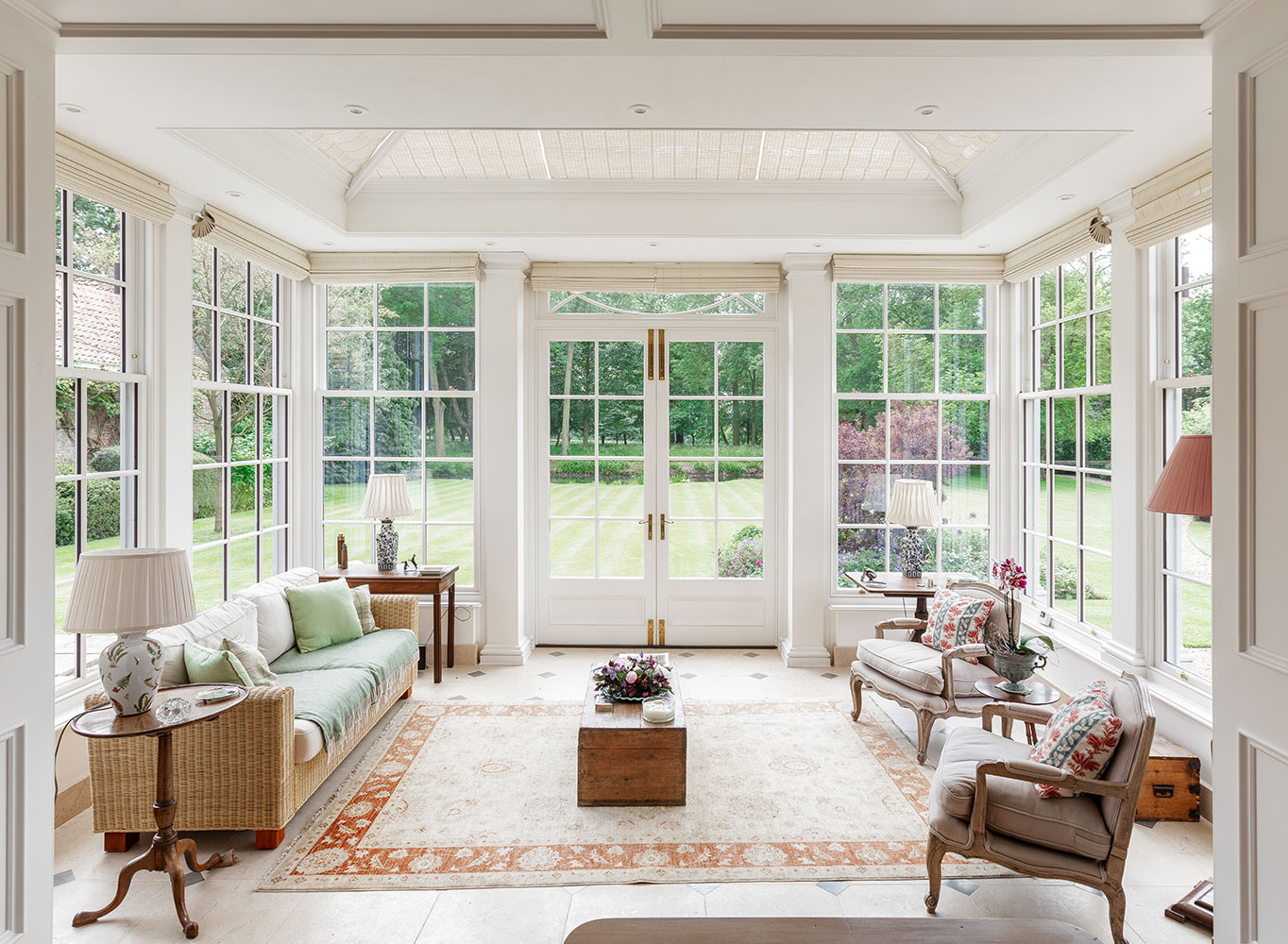
Having a cosy light filled sitting room can be often achieved with an orangery extension. Below you can see examples of sitting rooms within orangeries that have an abundant natural light enhancing the ambiance of the room, making it an inviting space.



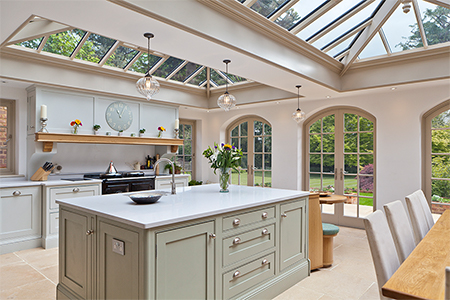
Adding a kitchen orangery extension is a brilliant concept for homeowners seeking to combine functionality with aesthetics. This design idea seamlessly integrates the heart of the home, the kitchen, with the beauty of the outdoors.
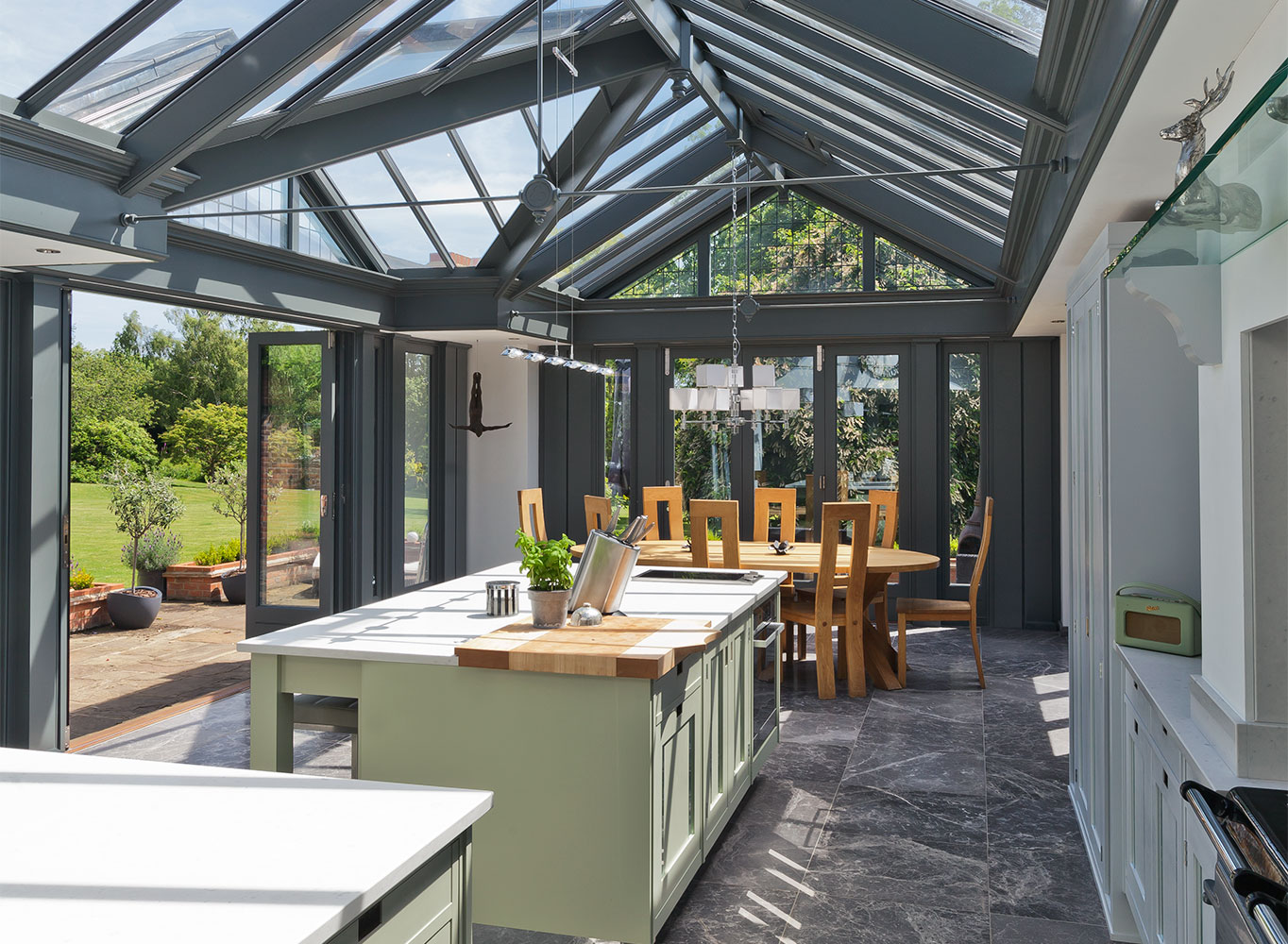

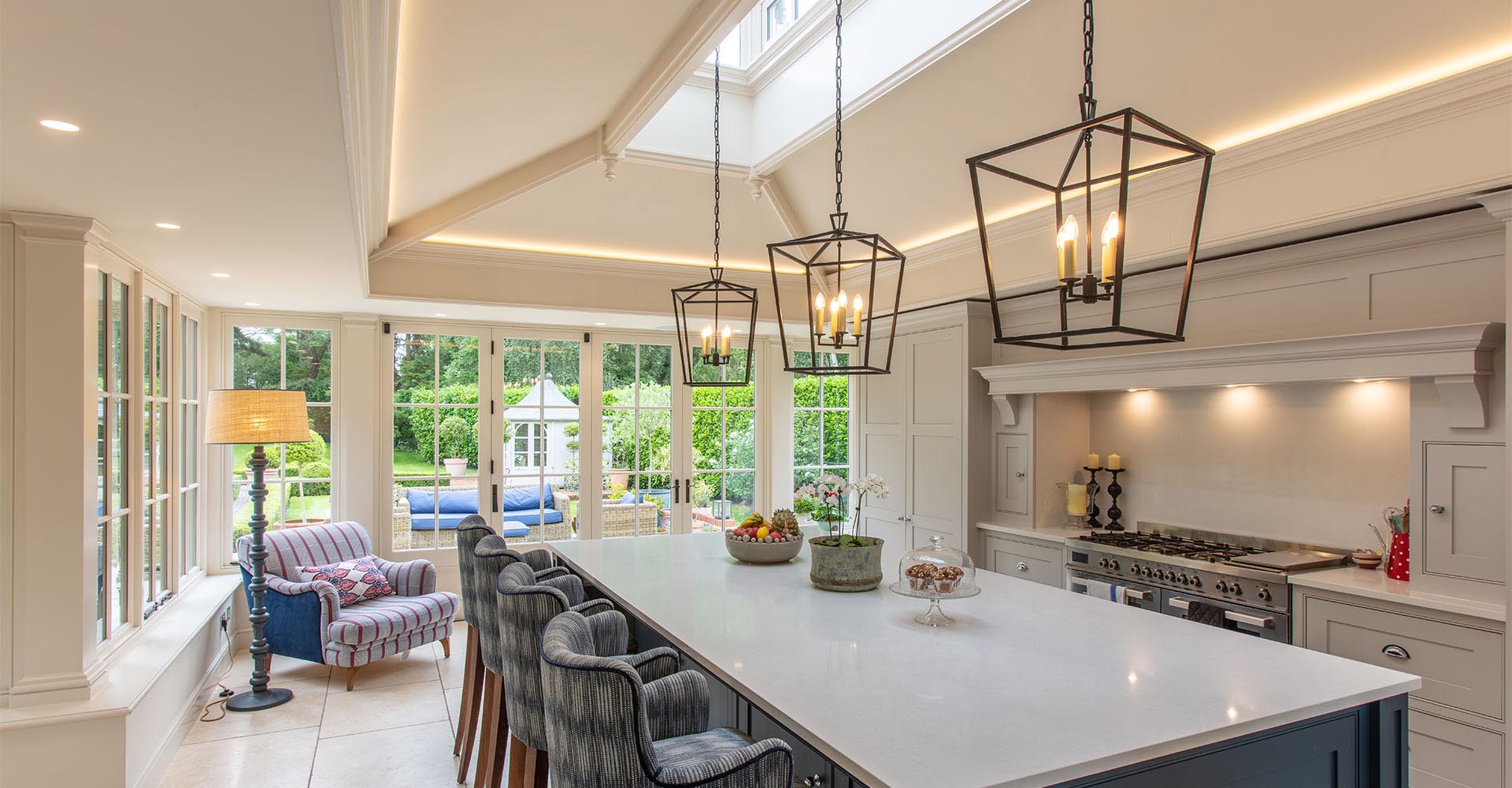
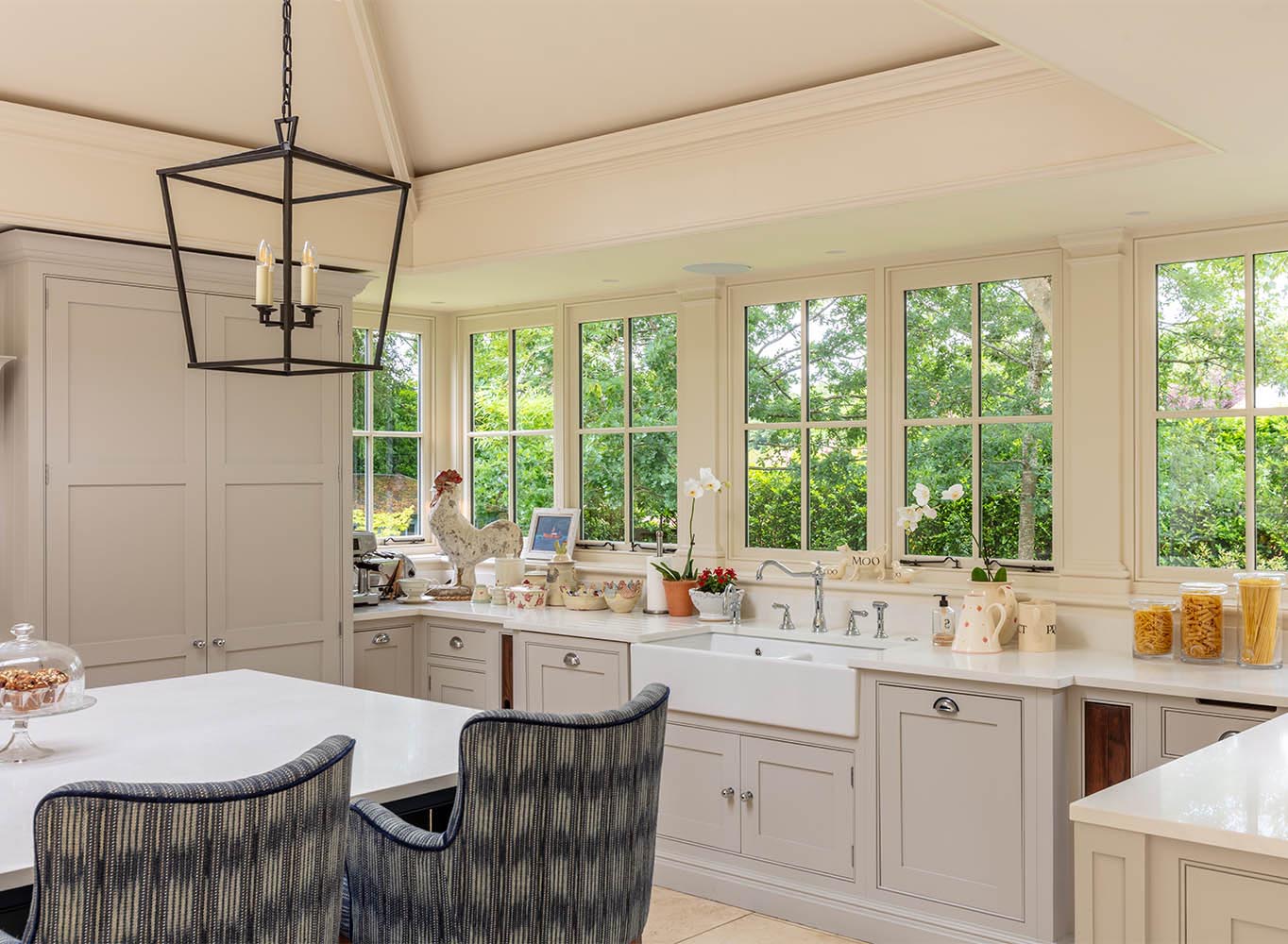
Looking for more ideas for a kitchen orangery extension? Read our article on Transforming your home with a kitchen orangery extension
Orangeries can also be used as a creative entrance hall idea, bringing natural light and grandeur, creating an inviting and visually impressive transition from the outdoors to the indoors.


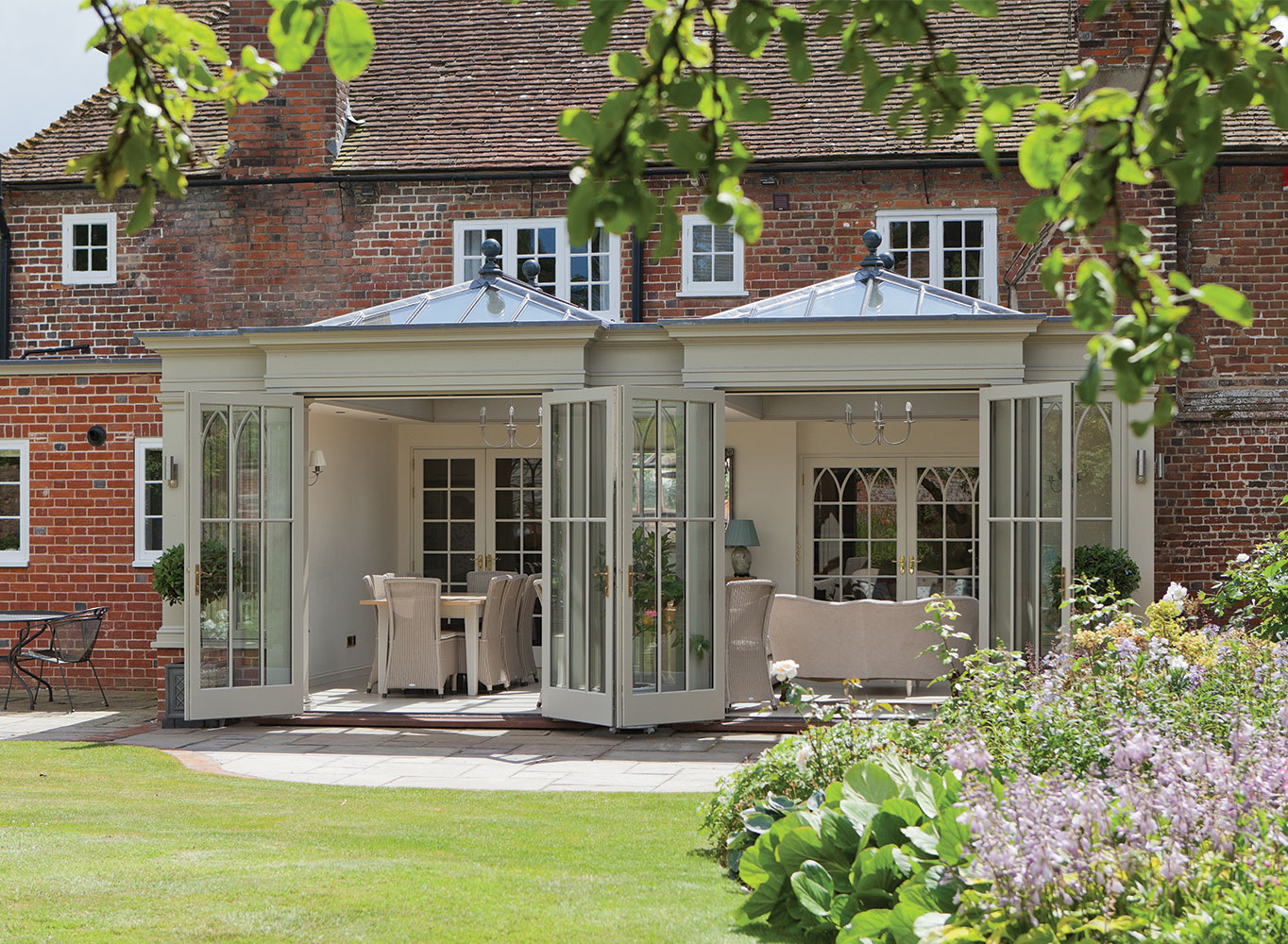
Designing an orangery with two roof lanterns instead of one introduces a unique architectural element that optimises natural light. The dual roof lanterns not only evenly distribute sunlight but also add a sense of balance and symmetry to the design. This feature can be especially beneficial for larger orangery spaces.



For passionate plant enthusiasts, the concept of an orangery or conservatory takes gardening to new heights. Such spaces offer ideal conditions for a diverse range of plant species, allowing the nurturing of tender and exotic plants.


Related: If you are designing an orangery which will house a variety of plants, read our guide on how to choose and grow plants in an orangery
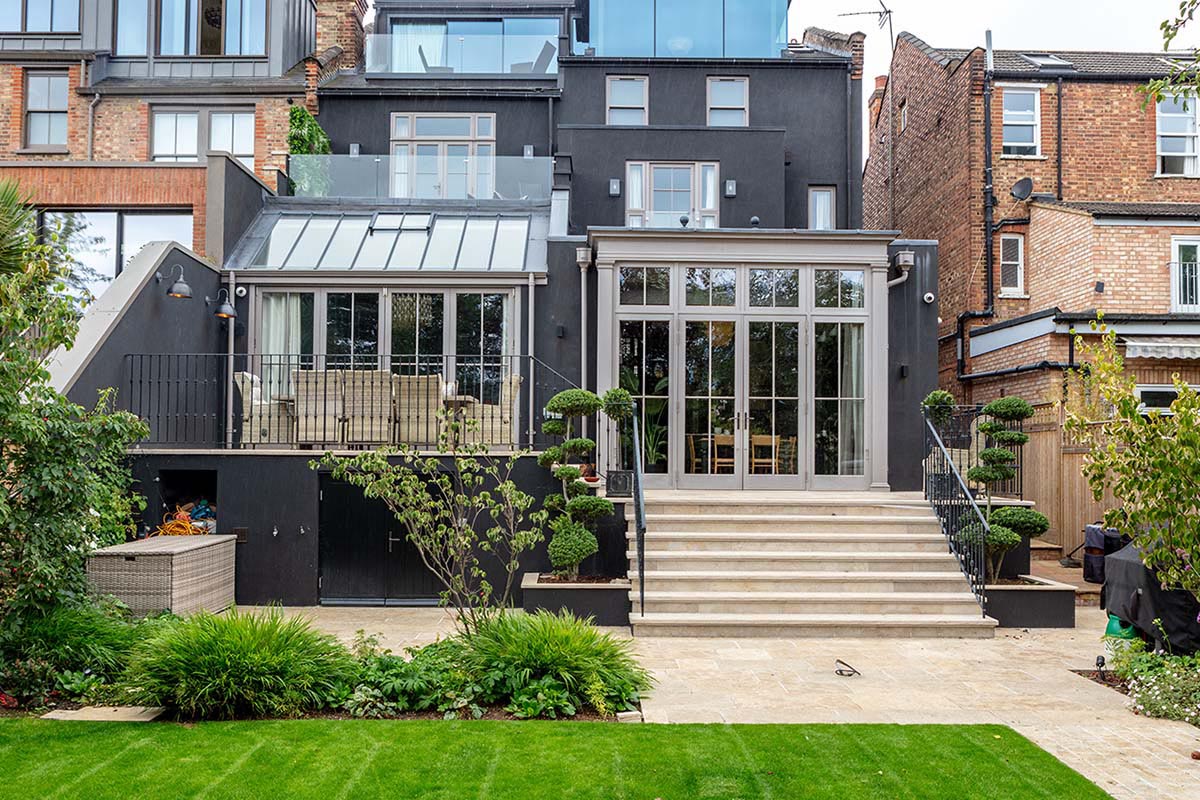
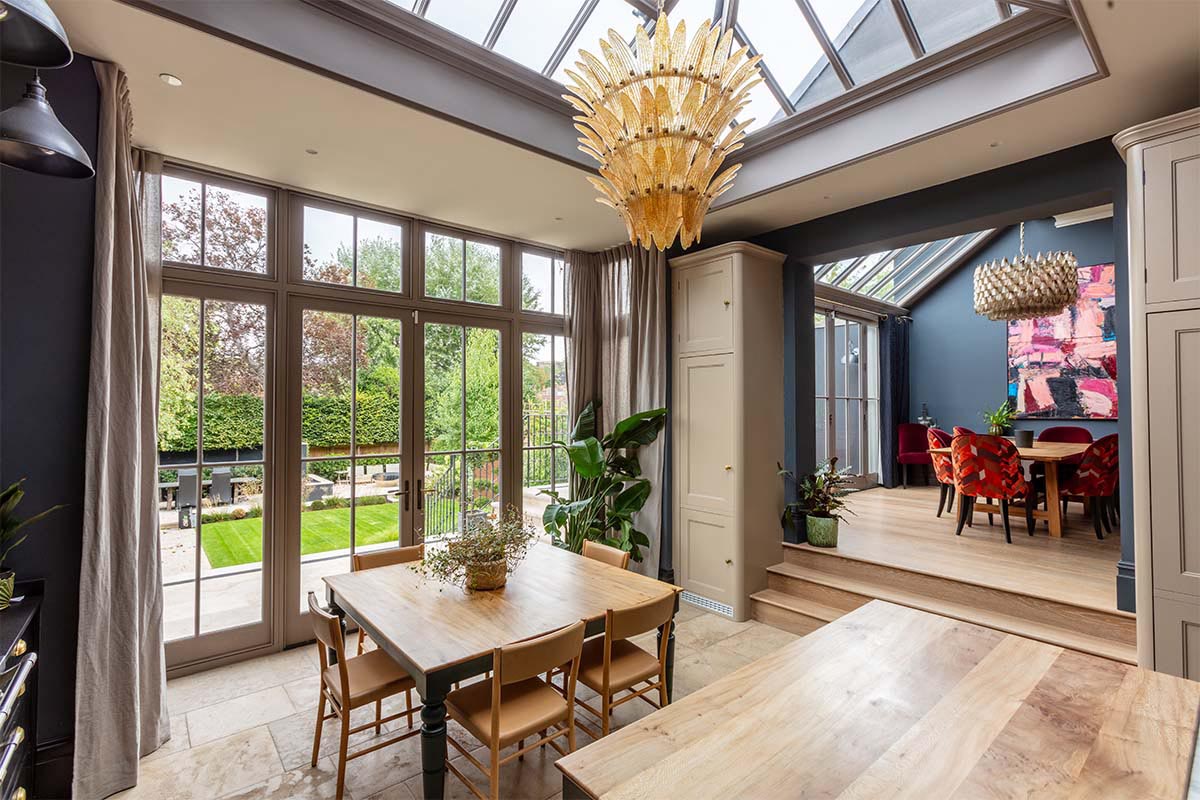
Extensions designed with multiple structures offer a versatile way to expand a home while enhancing light, flow, and functionality. For example, this North London townhouse was transformed with a classical orangery, complemented by a lean-to with full-width folding doors. This design enabled the extension to seamlessly connect and function across the home’s different levels.
Opting for a solid roof as an orangery design option, rather than a glass roof, creates a room with a different atmosphere. It provides enhanced privacy, insulation, and design flexibility. It offers year-round comfort and can be more easily integrated seamlessly with the existing architecture.
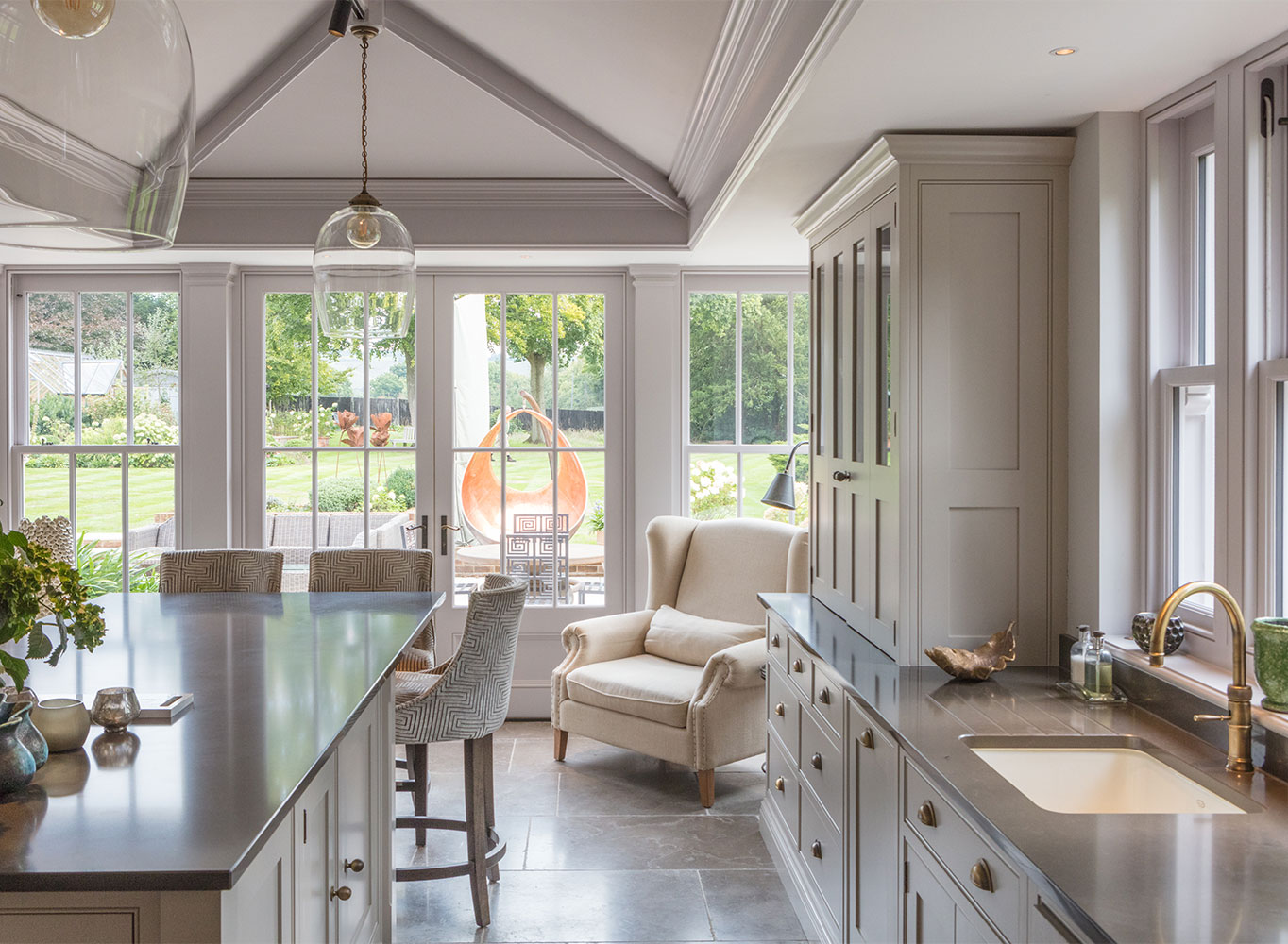


Folding doors are a superb addition to orangeries. They seamlessly connect indoor and outdoor spaces, offering versatility to open up for a panoramic garden view or close for privacy.


The concept of a multi-level orangery can be a versatile and innovative architectural idea in various settings. Beyond specific projects, the notion of designing an orangery with different levels presents opportunities for creating dynamic and adaptable spaces.
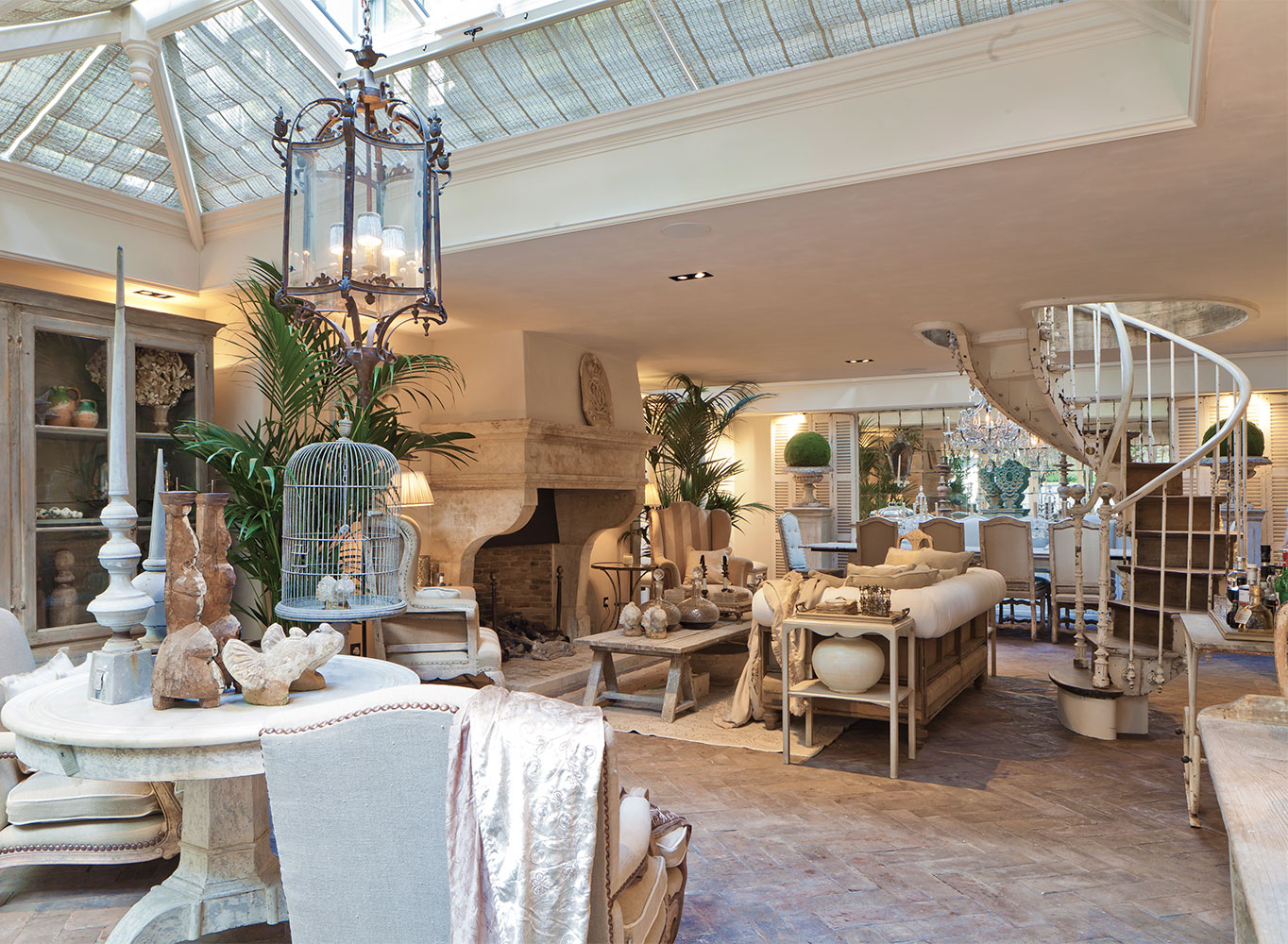

Incorporating a bar into an orangery design elevates the space for socialising and entertainment. This concept blends natural light with an outdoor connection, creating an ideal setting for gatherings and cocktail parties.
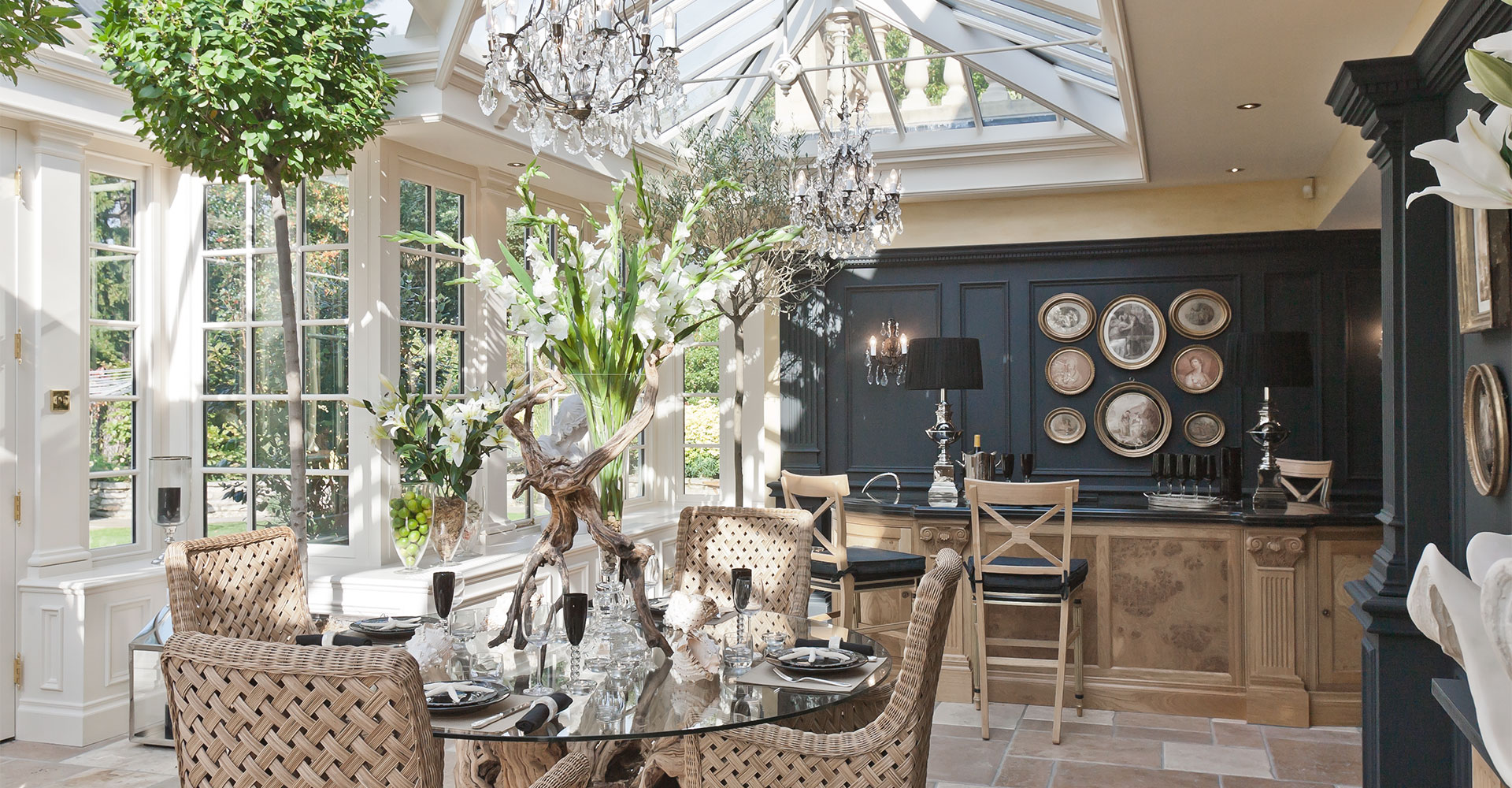

Instead of a standard square or rectangle shape, orangeries with angled or curved sides create a more distinctive look while improving natural light and garden views, making your space feel brighter, more open, and uniquely tailored to your home.
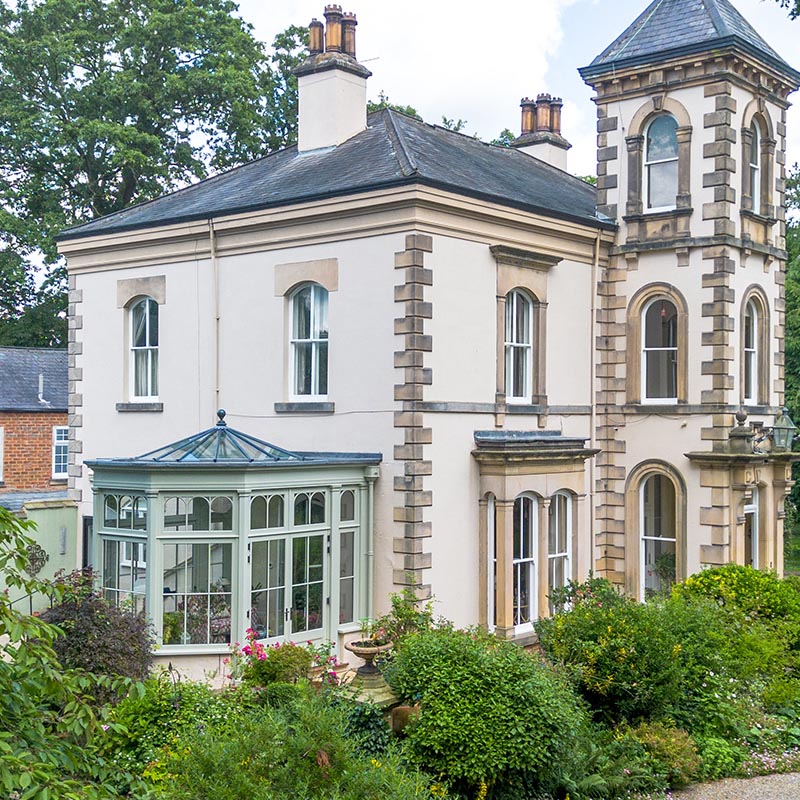
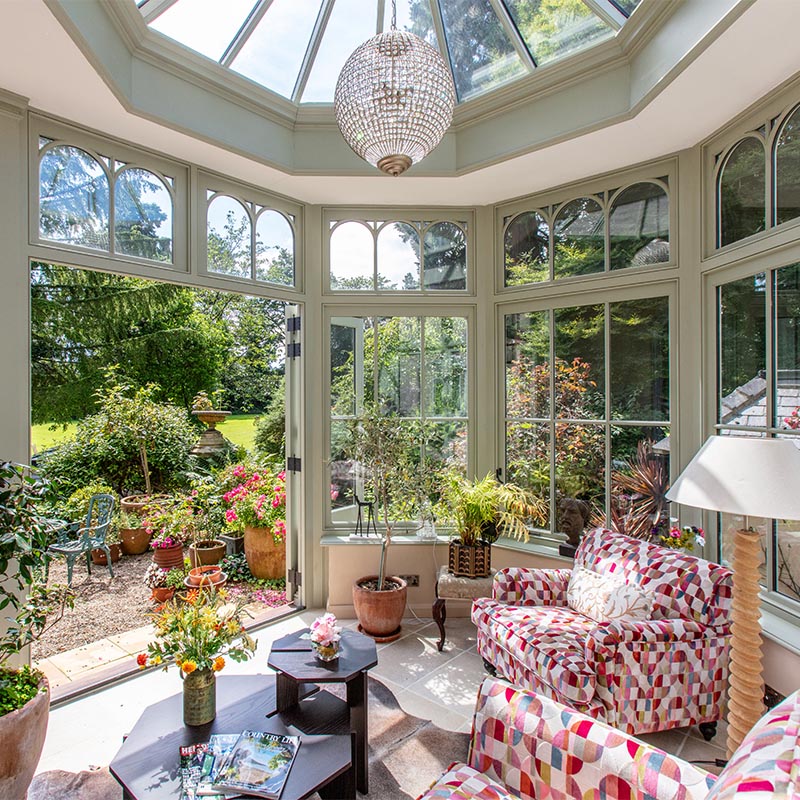
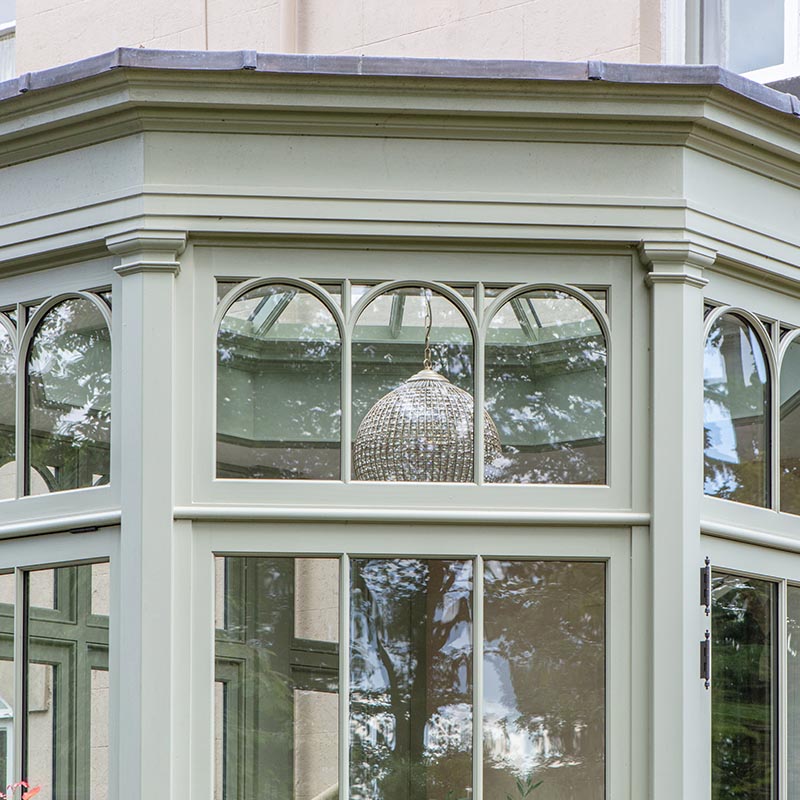
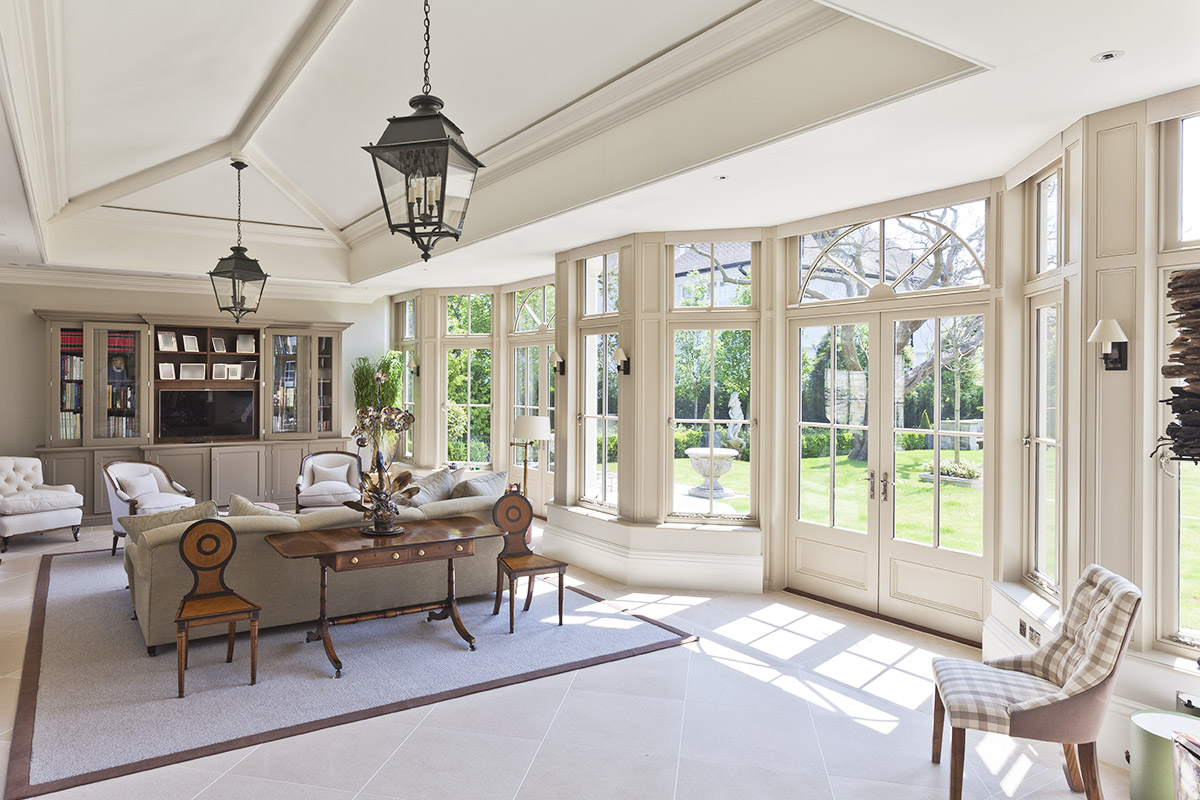
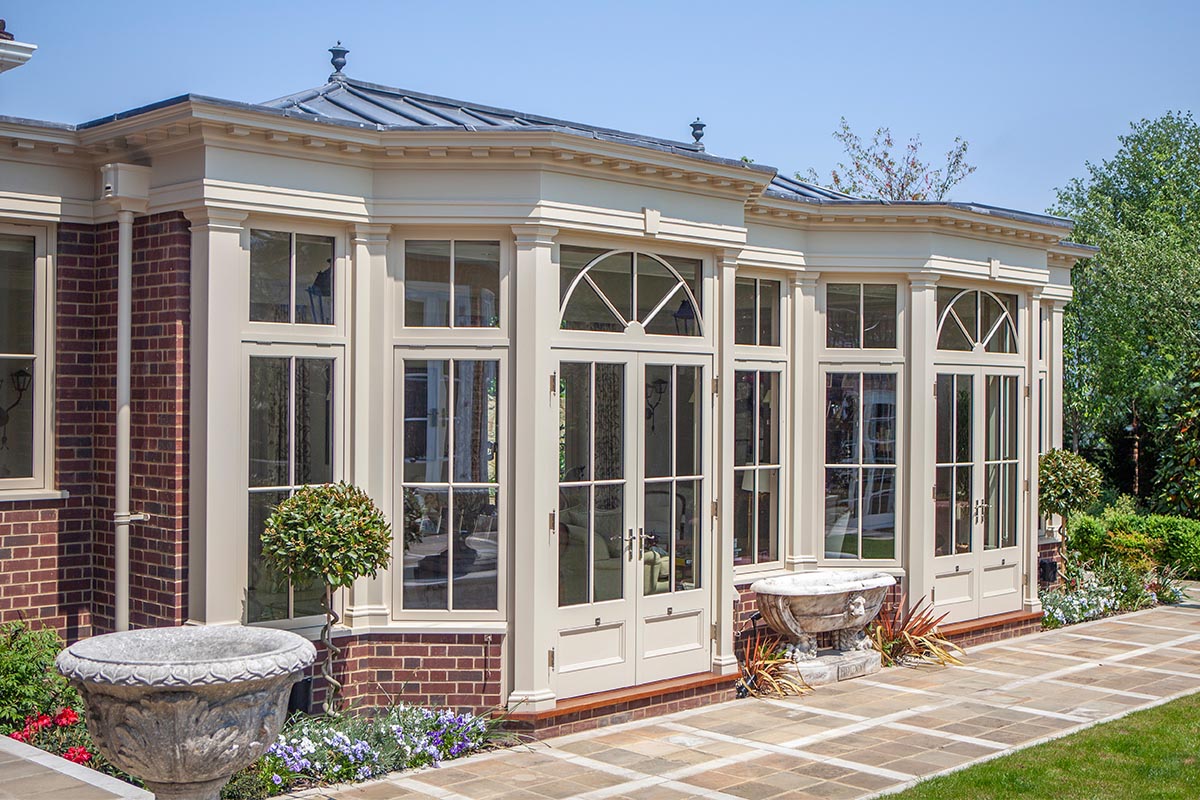
Using an orangery for a smaller extension, for example on a townhouse, maximizes space where room is limited. This idea adds natural light and functionality, making it ideal for urban settings where outdoor space is scarce.


Designing an orangery to take advantage of a small unused space of your garden? Read our guide with detailed information on small conservatories and orangeries
An orangery design that seamlessly blends indoor and outdoor living offers a connection between the interior and nature. This versatile concept can create a space used as a lounge, dining area, or room for entertaining creating a serene retreat within the property.

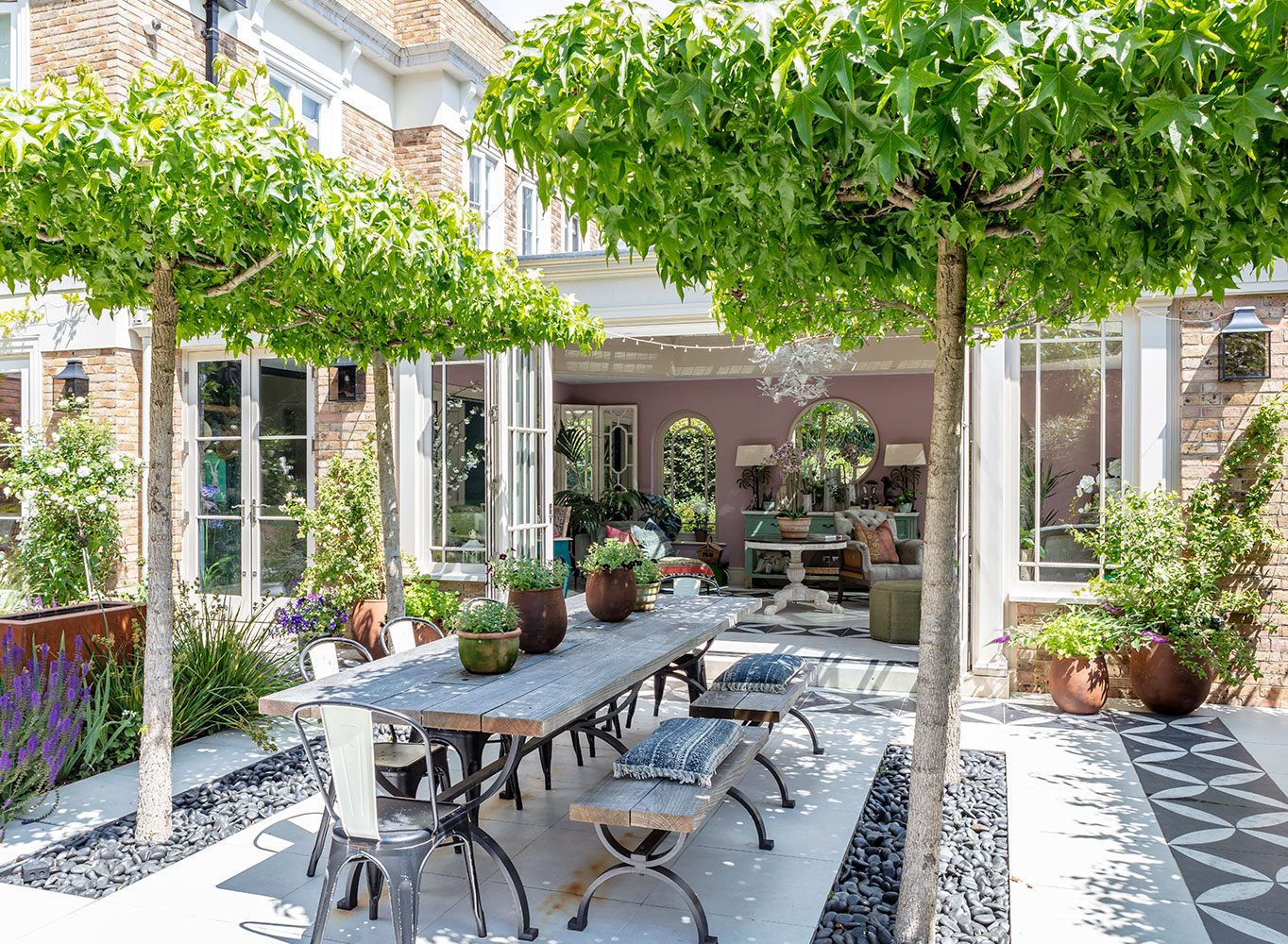


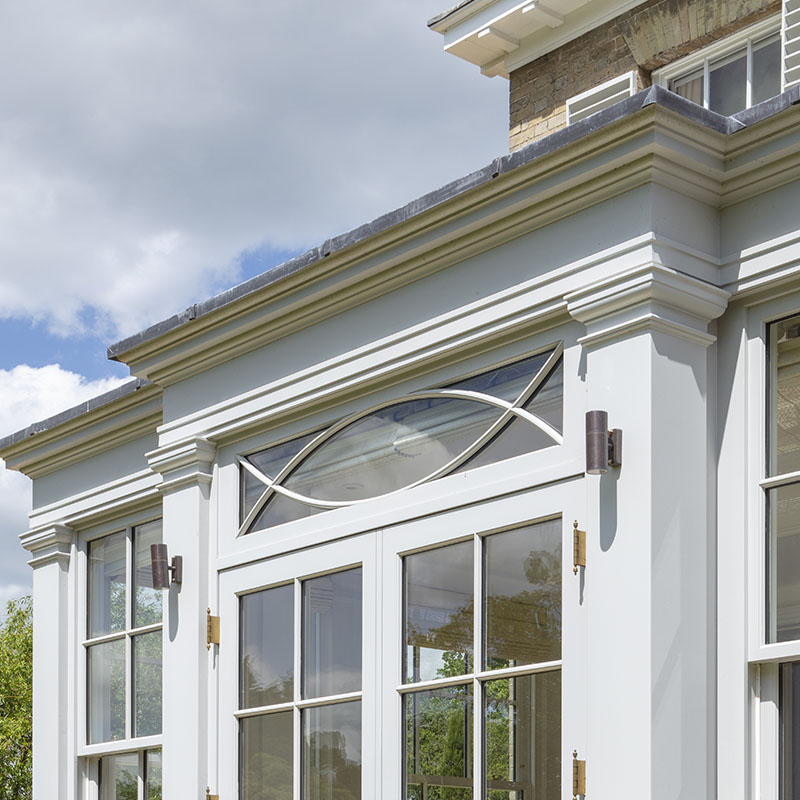
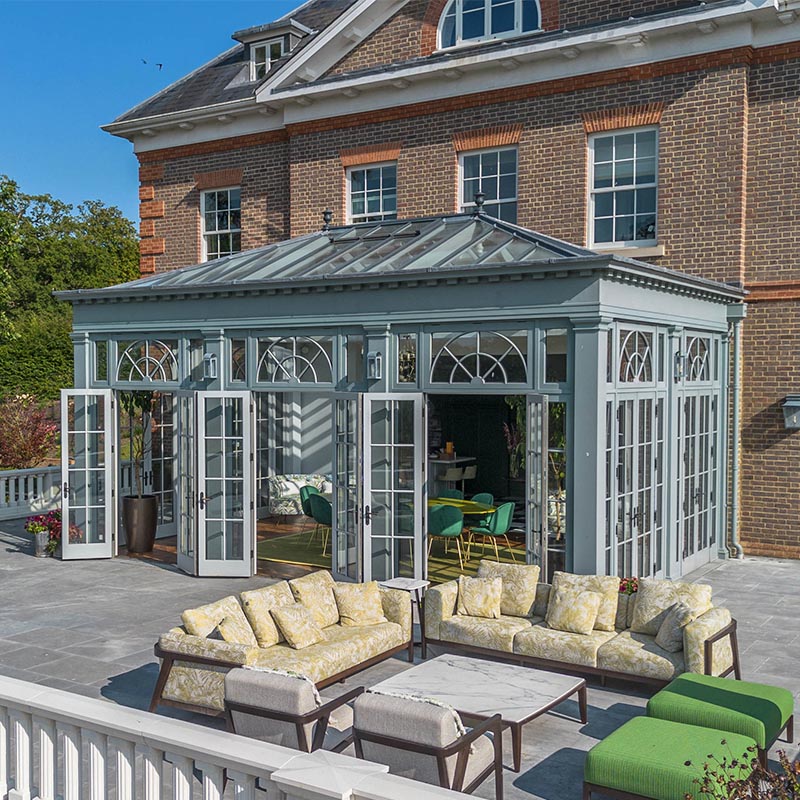
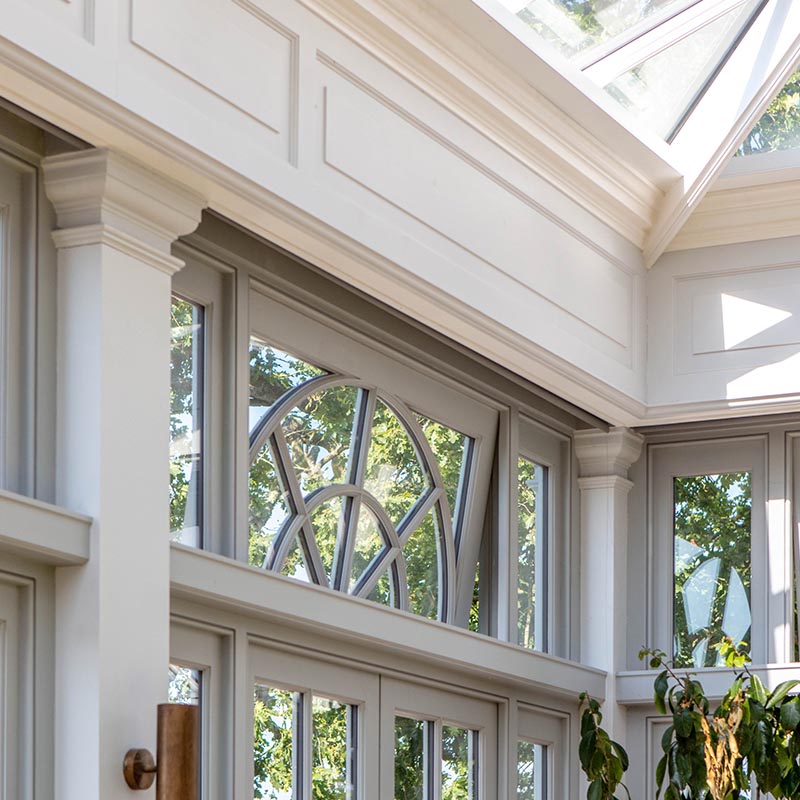
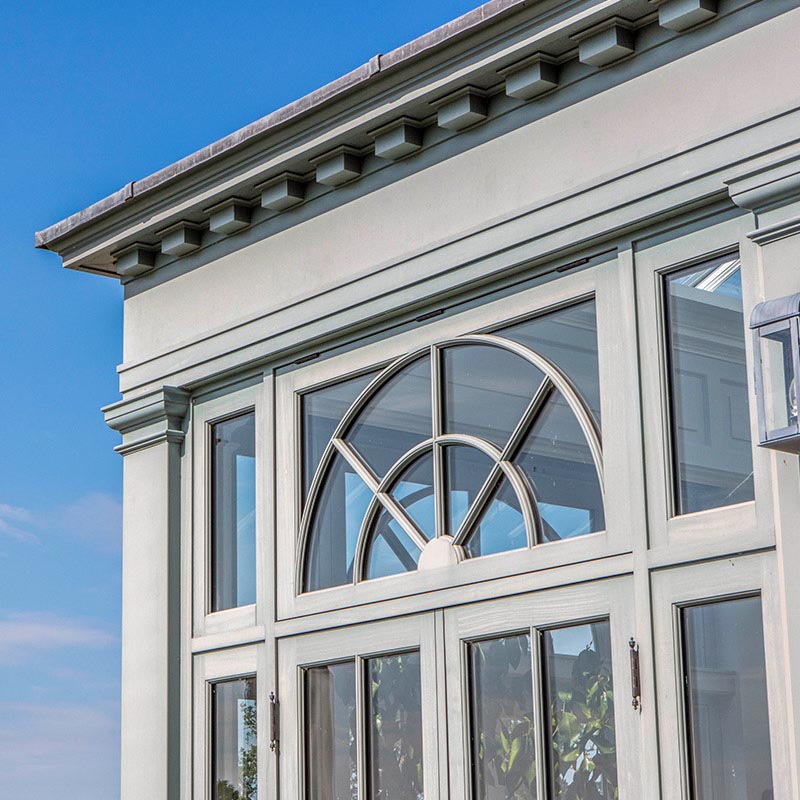
Adding features such as decorative columns, corbels, finials, fanlight designs and clerestory detail can enhance an orangery’s character, especially when the design draws inspiration from the host building to create a harmonious and unified appearance. The examples below show how these architectural features can elevate an orangery’s overall design.

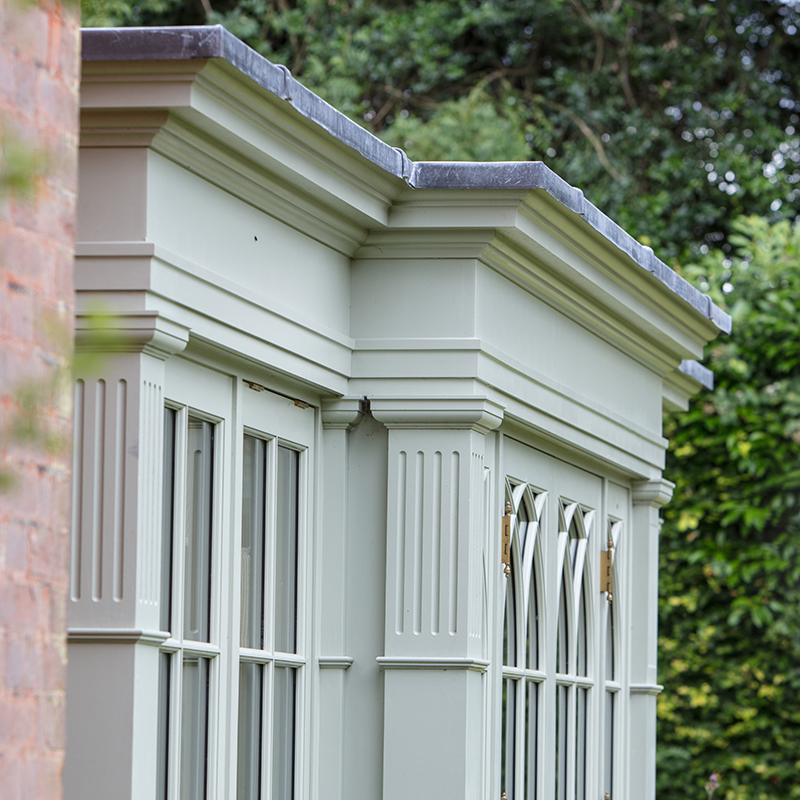
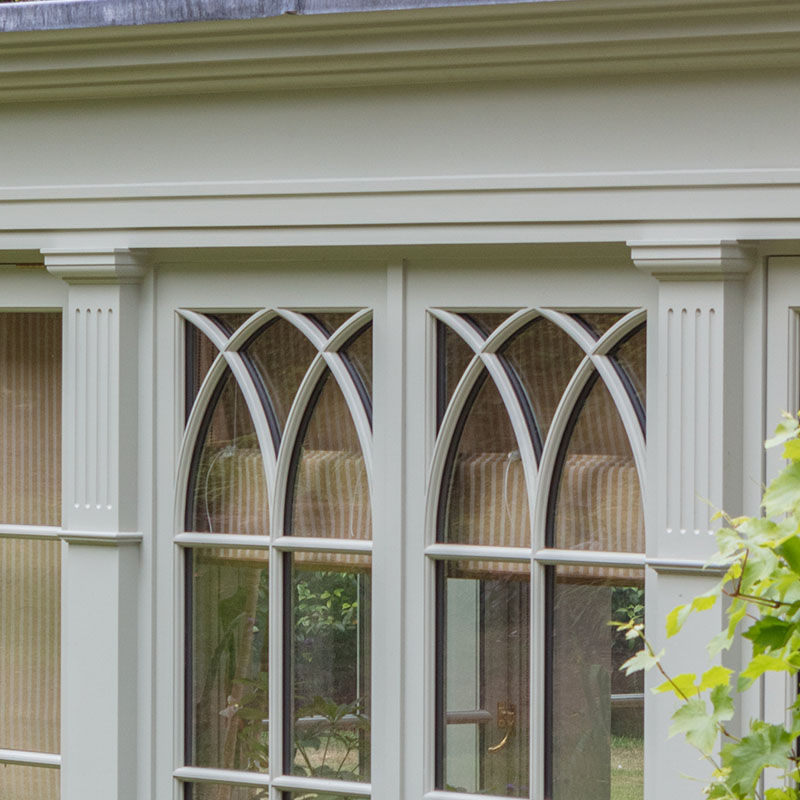
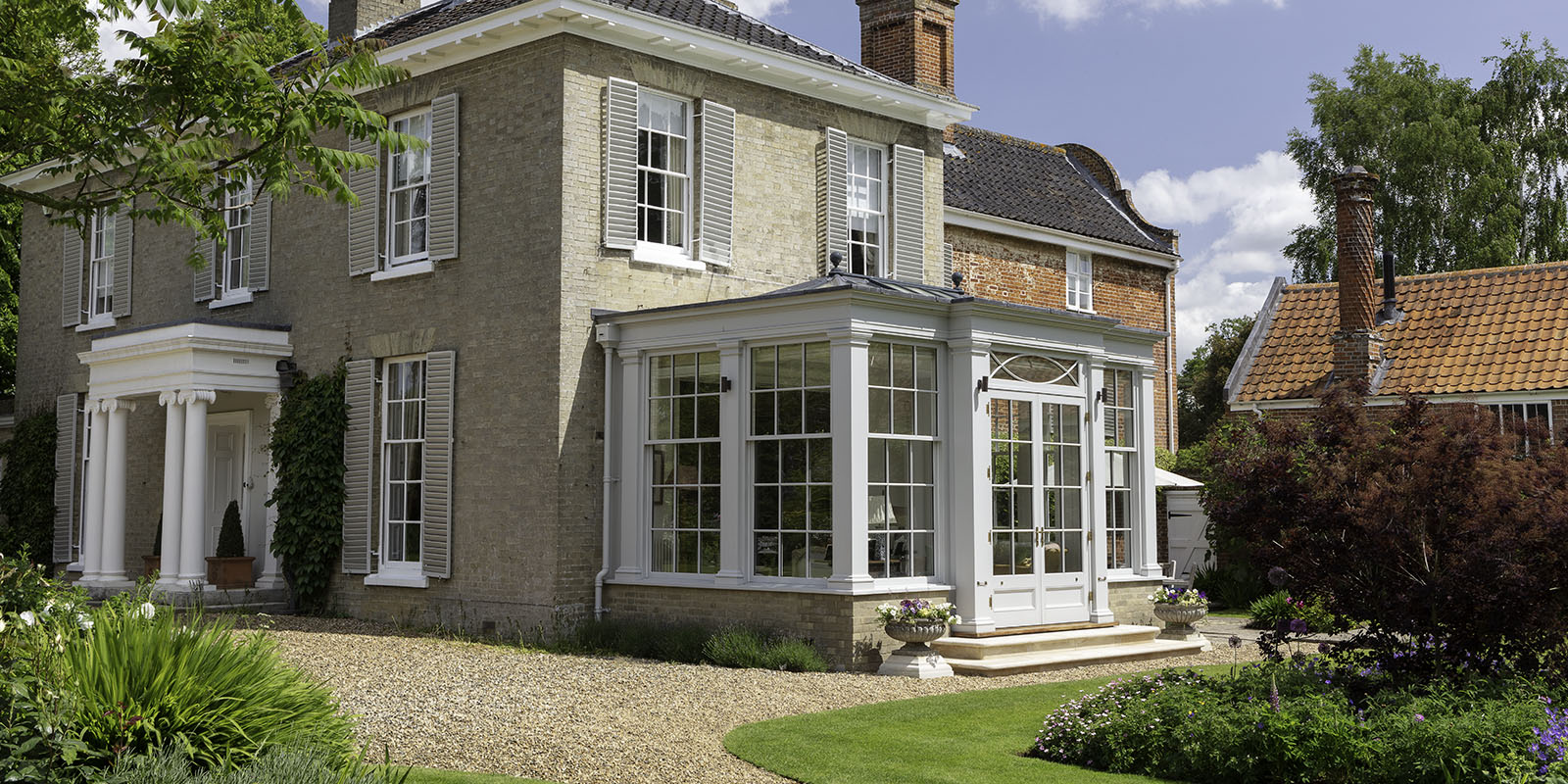
We hope this list of design ideas for orangeries has provided you with some inspiration for your own project. If you are looking for more examples, explore our extensive inspirational gallery, which features a mix of both orangeries and conservatories. Alternatively, you can read our case studies, which provide in-depth insights into individual projects."
View GalleryVale Garden Houses have the expertise to help you design and build an extension to your home that meets your needs and complements your property. We have over 40 years of experience designing and manufacturing bespoke conservatories and can work with you to create a conservatory that suits your style, space, and budget. Contact us today to learn more about how we can help you bring your project to life.
Complete our online form to download or receive by post our inspirational 108-page brochure featuring an extensive collection of conservatories, orangeries and rooflights.
Request Your BrochureUnderstand the difference between a conservatory and an orangery by reading our comprehensive article on the differences.
Learn More